
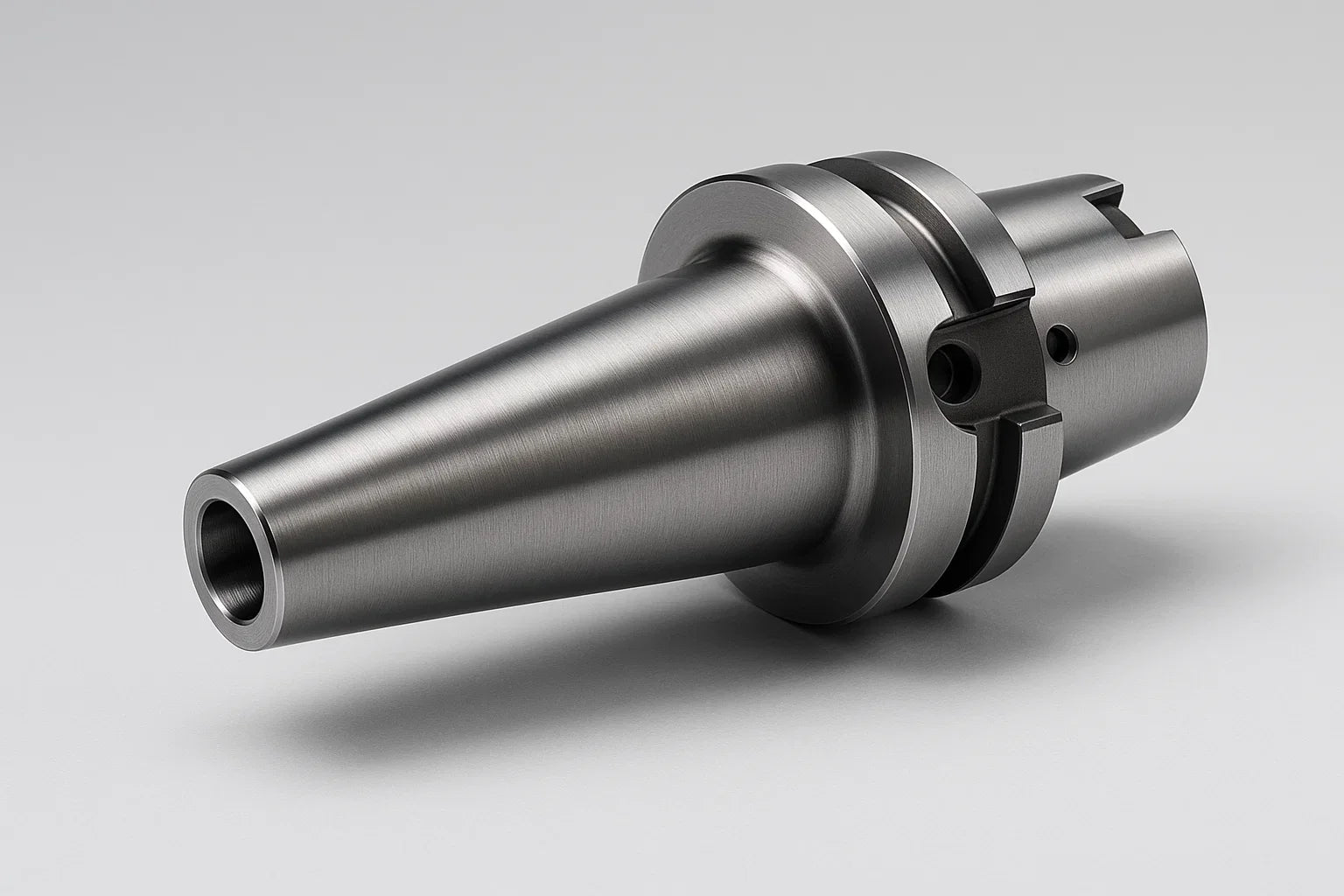
Shrink fit, hydraulic, ER or Weldon? Choose the holder that protects the process
Holder choice is one of the fastest ways to turn a good cutting tool into a disappointing setup. This article gives readers a practical framework for matching runout, grip security, access and stability to the job.
This article is the bridge from tool selection into setup quality. It gives the reader a reason to value holder guidance and makes the EdgeVend promise feel more machine-near, not just more digital.
A strong cutter in the wrong holder still behaves like a weak setup.
Holder choice is often treated as an afterthought because the cutting tool gets the attention. In practice, the holder quietly decides whether that tool runs true, stays secure and reaches the part the way the programmer intended.
That is why shrink fit, hydraulic, ER and Weldon are not interchangeable preferences. They solve different stability problems.
If you buy the holder logic wrong, the process can become unstable even when the cutter itself is the right one.
-
1Shrink fit Excellent runout, slim nose and high-speed confidence when precision and access matter more than convenience.
-
2Hydraulic Strong for repeatability, damping and quick changes when finish and tool life matter and torque demand stays realistic.
-
3ER collet Flexible and widely useful across many tools, especially when range, availability and practicality matter.
-
4Weldon side-lock Built for pull-out security and roughing confidence where torque and engagement are the primary concern.
When runout and finish matter most
Shrink fit earns its reputation when you want a slim profile, strong clamping and very good concentricity. It is a powerful choice for high-speed work, narrow access and demanding finishing, especially where extra bulk at the nose becomes a problem.
Hydraulic holders are attractive when you want easy handling, good damping and repeatable performance without the heat-based handling of shrink fit. They can be excellent for finishing and general precision work, but they are not the default answer for every heavy roughing job.
If finish, tool life and small-diameter confidence matter most, start your holder decision with runout, not with convenience.
When torque and pull-out security matter most
ER collet systems remain popular because they are versatile, familiar and practical. They cover a wide range of tools and workshops well, especially when flexibility matters. But they also depend heavily on assembly quality, cleanliness and realistic expectations around runout.
Weldon side-lock holders are different. They are chosen because they lock onto the shank and resist pull-out well in demanding roughing conditions. That strength comes with trade-offs: bulkier form, weaker runout performance and less appeal for fine finishing or delicate small tools.
Choose Weldon for security. Choose shrink fit or hydraulic for precision. Choose ER when flexibility is the real requirement.
A practical first-pass chooser
-
1Finishing and slim access Start with shrink fit or hydraulic, then check reach, diameter and machine-side practicality.
-
2General-purpose shop flexibility ER is often the realistic workhorse when the workshop needs broad coverage and fast availability.
-
3Heavy roughing and pull-out risk Weldon becomes attractive when security beats elegance.
-
4High-speed precision with minimal nose interference Shrink fit deserves serious attention when the setup needs to stay compact and accurate.
The right answer is rarely ideological. It comes from what the tool is doing, how stable the machine and setup are, and where the real process risk sits.
How EdgeVend should support this decision
The point of holder guidance is not to decorate the product page with technical language. It is to reduce avoidable mismatch between tool, holder and machining intent.
That is why this topic sits naturally next to Set-Up Advisor, Tool Finder logic and process-aware product pages. A smarter tooling purchase should move one step closer to a stable cut, not one step closer to a troubleshooting session.
When you think holder-first where it matters, you protect the value of the tool you already selected.
Tool choice decides potential. Holder choice decides whether that potential survives contact with the spindle.
The bottom line
Shrink fit, hydraulic, ER and Weldon each deserve a place, but not for the same reason.
The better buying habit is to choose the holder by the failure you most want to avoid: runout, pull-out, bulk, weak repeatability or setup friction.
That is how holder selection becomes part of process quality instead of an afterthought.
Want the selection path to stay connected to setup reality?
Use Set-Up Advisor and Troubleshooting as the bridge between tool choice and process stability. That is where smarter digital buying becomes more than catalog convenience.


